 robotindex
 Pololu 3pi+ 2040
A 2-wheel differential-drive robot from Pololu Corporation built around an RP2040 control board — the same chip that powers the Raspberry Pi Pico — ships MicroPython-preloaded, and is also programmable in C/C++ via the Pico SDK. Features a 5-sensor IR reflectance line-following array, front bump sensors, a 6-axis IMU plus magnetometer, a 128x64 OLED display, and 6 addressable RGB LEDs, sold across three motor-gearing tiers (Standard, Turtle, Hyper). Skews toward a college/serious-hobbyist audience rather than young children — assembly requires soldering. Note: unlike most entries in this catalog, this product's chassis is visually near-identical to Pololu's separate, Arduino-compatible 3pi+ 32U4 OLED robot, which the submitted photo actually shows — see the image caption.
pololu.com/3pi-plus-2040 →
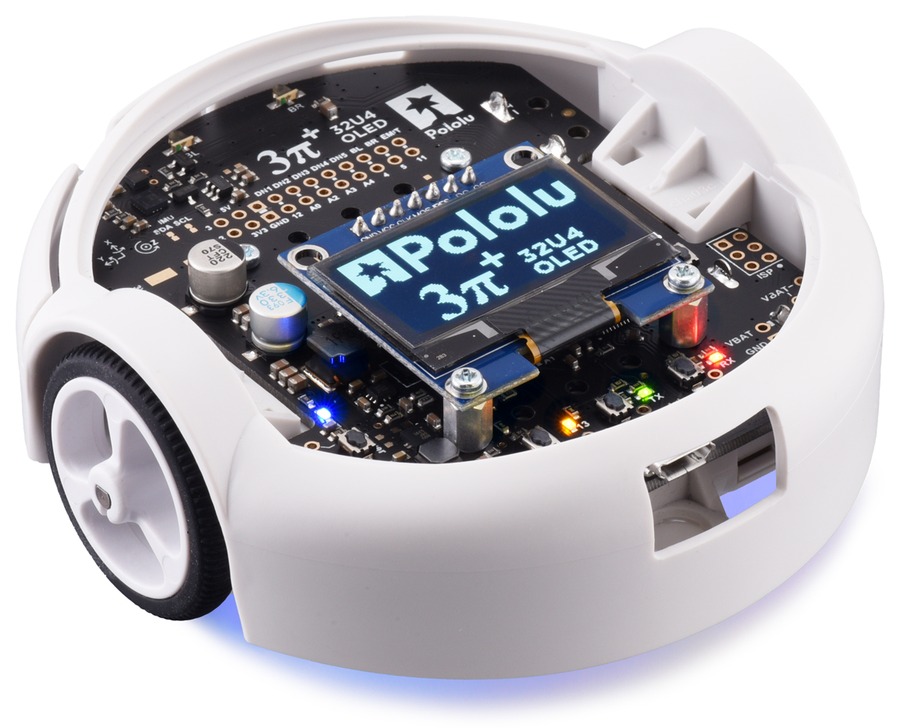
Image: user-submitted — board silkscreen reads "3π+ 32U4 OLED," Pololu's separate ATmega32U4-based robot, not the RP2040-based 2040 board this entry covers. Same chassis, different control board; see Worth Knowing.
Specs
Battery
4x AAA, rechargeable NiMH recommendedalkaline (6V nominal) also supported; genuinely not lithium
Weight
~100gassembled, without batteries; Pololu doesn't publish a combined weight including batteries
Dimensions
9.7 × 9.6 × 3.6 cm97mm L × 96mm W × 36mm H per Pololu's own spec page; shared chassis across Standard/Turtle/Hyper motor tiers
Connectivity
USB-C, no radiothe bare RP2040 has no onboard Bluetooth or Wi-Fi, unlike the Pico W; the older 32U4 board instead uses Micro-B
Sensors
5-sensor line array + bump + IMU5 downward IR reflectance sensors, 2 front bump sensors, plus an LSM6DSO accel/gyro and LIS3MDL magnetometer (6+3-axis across two chips) via I2C
Software
MicroPython (preloaded) or C/C++via the Pico SDK; a third-party Arduino-compatibility library also exists. Officially MicroPython only — no confirmed official CircuitPython support
Display
128x64 OLED (SH1106)plus 3 user buttons, a PWM buzzer, 6 addressable RGB LEDs, 1 yellow LED, and 5 blue power-indicator LEDs
Control Board
RP2040, not 32U432-bit dual-core Cortex-M0+ @ 125MHz, 264KB RAM, 16MB flash; Pololu's separate, visually near-identical 3pi+ 32U4 OLED robot uses an 8-bit ATmega32U4 instead — a completely different, older control board
Chassis
2-wheel diff. drive + ball castershared chassis design across both the 2040 and 32U4 product lines
Motor Tiers
Standard, Turtle, or Hyper30:1 (~1.5m/s), 75:1 (~0.4m/s, long battery life), or 15:1 (~4m/s, ships with a spare gearbox since it's fast enough to damage itself)
Audience
College/serious hobbyist levelassembly requires soldering skill per Pololu's own forum build reports; notably more technical than most robots in this subcategory
Reference Price
Assembled 3pi+ 2040 kits run $194.95 for the Standard or Turtle Edition and $208.95 for the Hyper Edition, with unassembled kits slightly cheaper (Standard kit: $179.95) and the bare RP2040 control board alone at $74.95. Volume discounts apply at 5+ and 25+ units for classroom or lab purchasing.
Insights
The photo attached to this listing is actually the separate 3pi+ 32U4 OLED robot (an older ATmega-based board, clearly silkscreened as such on the board and its own boot screen), not the RP2040-based 3pi+ 2040 that this entry's specs describe — both share an identical chassis, making the mix-up an easy one for a reseller or catalog to make. Pololu's own GitHub repo carries a genuine MIT license for the 3pi+ 2040's firmware, and while the company also publishes schematics and STEP models publicly, none of it carries a formal open-hardware license like CERN-OHL.
Firmware & Community
pololu/pololu-3pi-2040-robot
Pololu's own official example code repository for the 3pi+ 2040 robot.
Specs and history compiled from Pololu's own 3pi+ 2040 product pages, User's Guide, and published schematics/resources, the
pololu/pololu-3pi-2040-robot GitHub repository and its license files, Pololu's own company forum (including early-adopter build reports), Pololu's About page, and academic GitHub projects referencing the robot. The board-identification finding above (32U4 vs. 2040) is drawn directly from visual inspection of this entry's own product photo, cross-checked against Pololu's official product-line documentation for both boards. Other flagged uncertainties: whether Pololu's published schematics/CAD carry any formal open-hardware license (not confirmed either way), and no independently-confirmed dedicated Hackaday coverage of this specific product was found despite a search. This entry hasn't yet been cross-linked into the rest of the Classroom & Coding Kits subcategory or synced to the directory listing; that's planned for a later pass.