 robotindex
 Otto DIY Maker Kit
A small bipedal, mostly 3D-printed walking robot built around an Arduino Nano, 4 SG90 micro servos (2 hip, 2 ankle), and an HC-SR04 ultrasonic sensor doubling as its face. Programmed via "Otto Blockly" (a Blockly-derived block coding app that generates real Arduino C/C++) or directly in Arduino IDE/MicroPython. Sold either as a full kit with pre-printed body parts or an electronics-only "Maker Kit" for owners of their own 3D printer, who print the free, open STL files themselves. Descends from a documented lineage: Kevin Biagini's "BoB the Biped" → BQ's Zowi (Spain) → creator Camilo Parra Palacio's "Tito" → Otto, first launched via a 2017 Kickstarter.
ottodiy.com →
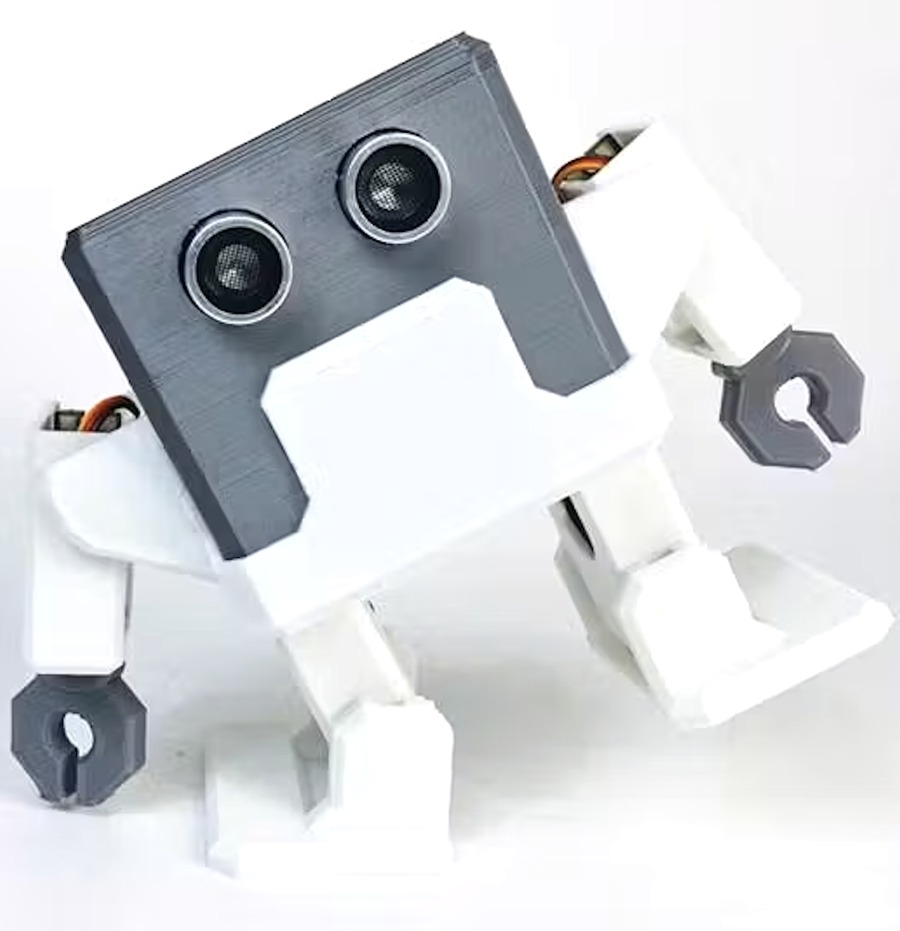
Image: user-submitted
Specs
Battery
4x AA (original design)Otto DIY+ and the newer HP Otto line switch to a rechargeable 3.7V Li-ion/LiPo pack instead
Weight
Not publishedno official figure found in this research; weight would vary by 3D-print settings and electronics-only vs. full kit
Dimensions
~11 × 7 × 12 cmassembled size per the Otto DIY project's own community documentation; an independent retailer listing gives a close ~11 × 6.5 × 11.5 cm
Sensors
HC-SR04 ultrasonic ("eyes")obstacle avoidance/distance sensing; a passive buzzer provides sound; some variants add a MAX7219 LED matrix face or RGB LEDs
Software
Otto Blockly + Arduino C++Blockly-derived (Google/MIT lineage) block coding generates real compiled Arduino code; official MicroPython port and a mobile Bluetooth app also exist
Control Board
Arduino Nanothe current commercial "HP Otto" flagship has moved to an ESP32 (Wi-Fi/BLE) board instead — a separate, newer product line from the classic open Otto DIY described here
Actuation
4x SG90 micro servos2 hip + 2 ankle, giving the biped walking gait; Otto DIY+ upgrades to MG90 metal-gear servos and adds Bluetooth
Body
6 3D-printed PLA partspress-fit, no supports needed at ~0.15mm layer height/20% infill; free STL files published on GitHub, Printables, and Thingiverse
Kit Options
Full kit or electronics-onlya full "Builder Kit" ships pre-printed body parts; a cheaper electronics-only kit assumes you own a 3D printer and print the free body files yourself
Age Range
Marketed 7-8+, reviewed as harderan independent review explicitly recommends against unsupervised assembly by elementary-age kids, citing dense wiring and delicate servo calibration — a real tension with the marketed age range
Variants
Basic, DIY+, Humanoid, Ninja, HP Ottothis entry's photo matches the arm/gripper-equipped Humanoid-style build; HP Otto (2024, ESP32-based) is a separately-branded commercial line from Moravia Consulting under HP's brand license
Reference Price
Current HP-branded Otto kits run roughly $150-$215 for a full Starter Builder Kit and around $150 for the electronics-only Starter Creator Kit, with price varying by reseller. The original classic Builder Kit ($49.99) and Maker Kit ($29.99) are no longer officially produced, since Otto DIY's line has moved to this HP-branded product.
Insights
The classic Otto DIY project is genuinely open source (GPL/MIT-licensed code, CC-BY-SA body files), but the newer commercial "HP Otto" line built by Moravia Consulting is narrower: the project's own blog states its custom electronics now balance openness with "product integrity protection" and reserve premium content for supporters and partners.
Firmware & Community
OttoDIY
Open-source 3D-printed bipedal robot kit — hardware, firmware, and app all published under the OttoDIY GitHub org.
Specs and history compiled from Otto DIY's own site, blog, and software pages, the OttoDIY GitHub organization's repositories and their license files, Hackaday.io project pages for the original Otto and Otto DIY+, the original 2017 Kickstarter campaign page, HP Robots' current product/FAQ pages and reseller listings (Moravia Education, RobotShop, dstewart.com), and independent reviews (Tech Age Kids, mia-cat.com). Several details are flagged as unconfirmed above: the exact scope of what's open vs. proprietary in the newest HP Otto electronics, the "Kickstarter fraud" claim (one-sided, not independently corroborated), creator Camilo Parra Palacio's country of origin, and whether a Distributed Design Platform listing represents an actual won award or a nomination. A recollection that this project has documented Latin American humanitarian/institutional STEM adoption could not be independently confirmed and is likely a conflation with its Spain-based Zowi/BQ lineage; it isn't included above. This entry hasn't yet been cross-linked into the rest of the Classroom & Coding Kits subcategory or synced to the directory listing; that's planned for a later pass.